Canvas vs. Acrylic Awning Fabric: What a Custom Awning Is Made Of
Everyone still calls it canvas. Here’s what’s really on the frame, and why.
- Published
- Reading
- 3 min

Quick answer
“Canvas awning” is still the everyday name for a fabric awning, but most custom fabric awnings today are made of solution-dyed acrylic such as Sunbrella, not traditional cotton canvas. Sunbrella says its color is added to the fiber before it’s spun into yarn, so the color runs all the way through and resists fading, and the fibers resist mold, mildew, stains and water.
- 100%
- Solution-dyed acrylic in Sunbrella performance fabrics
- 1954
- Year this shop started sewing awnings in Portland
- 5
- Steps from fabric to finished awning, all under one roof
Customers often ask for a “canvas awning,” and we know what they mean: a fabric awning with color, maybe stripes, maybe the business name on the valance. What actually goes on the frame has changed a lot since this shop opened in 1954. Here’s what it is now, and why.
What “canvas” means now
Canvas traditionally meant a heavy woven cotton fabric, and for decades that’s what awnings were made of. The name stuck. Today, when people say “canvas awning,” they almost always mean a woven fabric awning, as opposed to aluminum or metal, and the fabric itself is usually acrylic.
Why most fabric awnings are acrylic now
The difference is how the color gets in. According to Sunbrella, its fibers are “saturated with color and UV-stabilized pigments before they’re spun into yarn,” so “the pigment goes all the way through the fibers and the color stays true over time.” Sunbrella also says its fibers are mold and mildew resistant and stain and water resistant. On an awning that sits through a Portland winter, that’s the point.
The retractable awnings we install use Sunbrella or Tempotest fabric. Our fixed and commercial awnings use Sunbrella and other proven awning fabrics, and our lettering is welded to Sunbrella. We keep the reasons simple: color that lasts, fabric that cleans, and covers we can match years later.
Side by side
| Feature | Solution-dyed acrylic | Traditional cotton canvas |
|---|---|---|
| What it is | Acrylic fiber with color added before spinning | Heavy woven cotton |
| Color | Added before the fiber is spun | Dyed after the fiber is made |
| Moisture | Sunbrella: mold, mildew and water resistant | Natural fiber; needs more care in wet climates |
| Cleaning | Mild soap and water; see the maker’s guidance | Varies |
| Today | The standard for custom fabric awnings | Mostly heritage or specialty use |
Choosing color and pattern
Fabric is the part of an awning you look at every day, so choose it in daylight. Bring a photo of the house or storefront to the showroom and hold samples up against it. A few things we suggest:
- Match the house, not the sample book. Pull a color from the trim, the door or the brick.
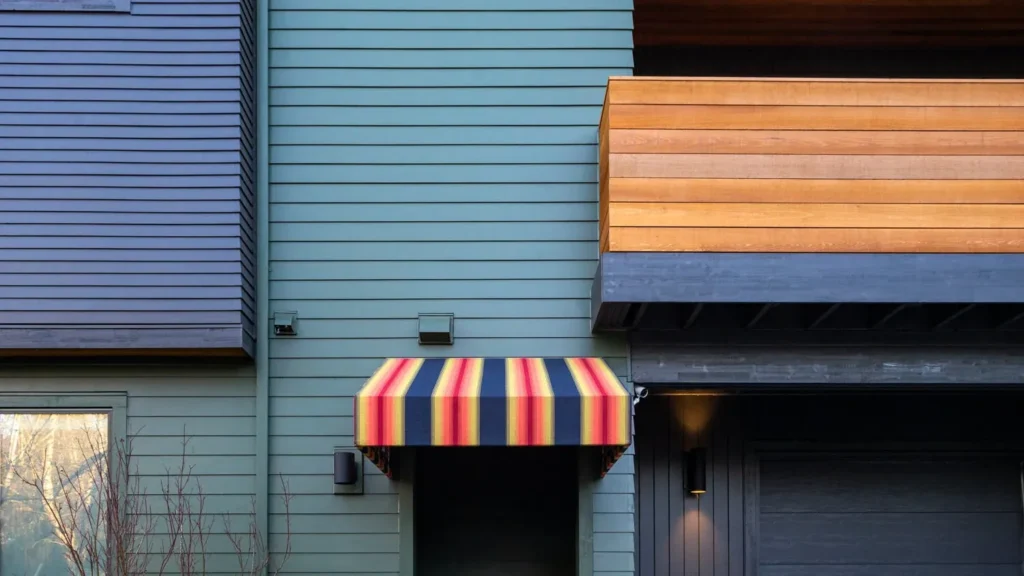
- Stripes read traditional; solids read modern. Both work on most houses.
- Think about lettering early. If a business name goes on the valance, choose fabric and lettering colors together.
- Plan for the future. When the cover eventually wears, a recover can match it, or change it.
If you’re replacing a cover, our awning fabric replacement guide covers recovers, matching discontinued patterns, and cleaning.
How a custom fabric awning is made
- Measure and designWe measure the wall or the existing frame and agree the shape: traditional, dome, concave or convex.
- Weld the frameAluminum frames are welded and shaped in our shop to fit the building.
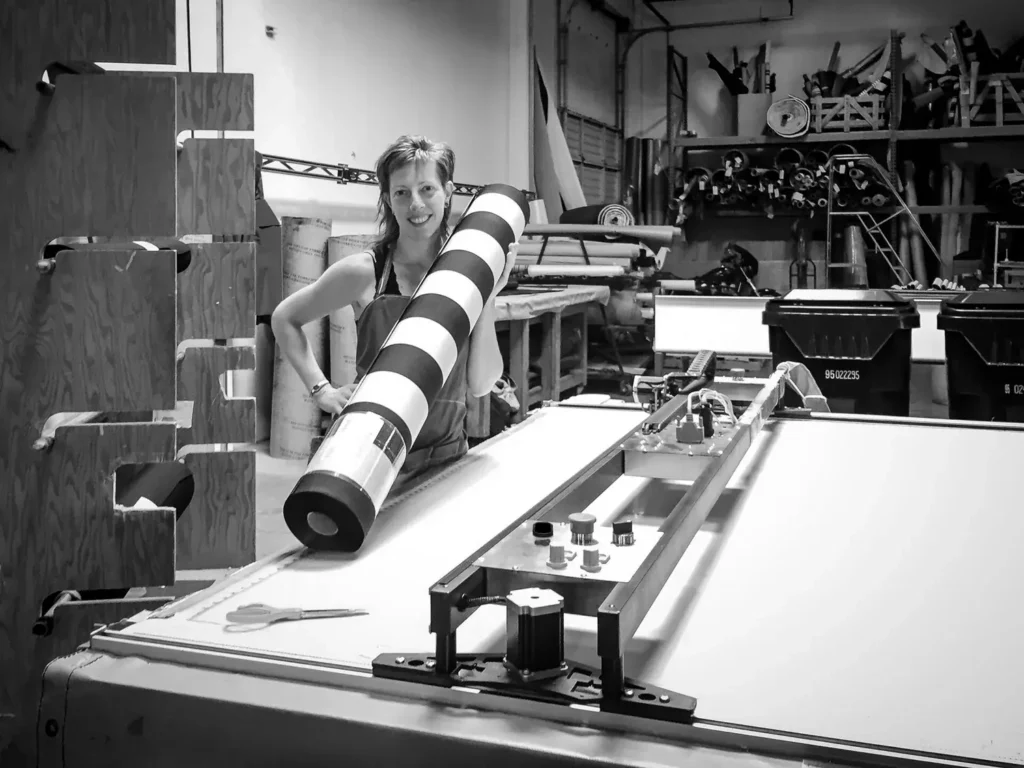
- Cut the fabricThe cover is laid out and cut on the long table.
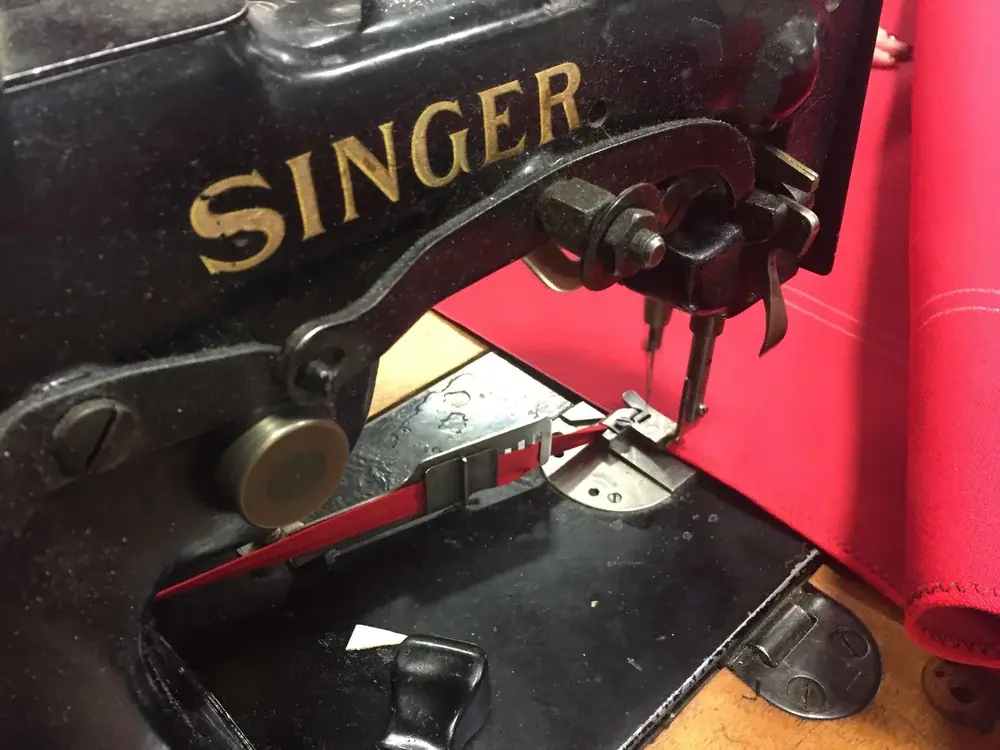
- Sew the coverSeams and valance are sewn in the shop, some of it on Betsy, the shop’s Singer.
- Letter and installGraphics are cut on our SGS 100 and welded to the fabric, then our own crew installs the awning.
That’s the whole reason the work stays in one building: fewer hand-offs, quicker turnaround, and your specs on file for the next recover. See window and door awnings for frames and shapes, or our story since 1954.
Sources
- Sunbrella Fabric Difference, Sunbrella
- Sunbrella Care and Cleaning for Awnings, Sunbrella
Questions
Awning fabric questions
Are awnings still made of canvas?
Some heritage and specialty awnings are, but most custom fabric awnings today are made of solution-dyed acrylic such as Sunbrella. People still call them canvas awnings.
What is solution-dyed acrylic?
Acrylic fiber with color and UV-stabilized pigments added before it’s spun into yarn, so the color runs all the way through the fiber. Sunbrella says this makes its fabrics fade resistant and durable.
What fabric does Rose City Awning use?
Sunbrella and other proven awning fabrics for fixed and commercial awnings, and Sunbrella or Tempotest for the SummerSpace retractable awnings we install. Lettering is welded to Sunbrella fabric.
Can I see awning fabric samples in Portland?
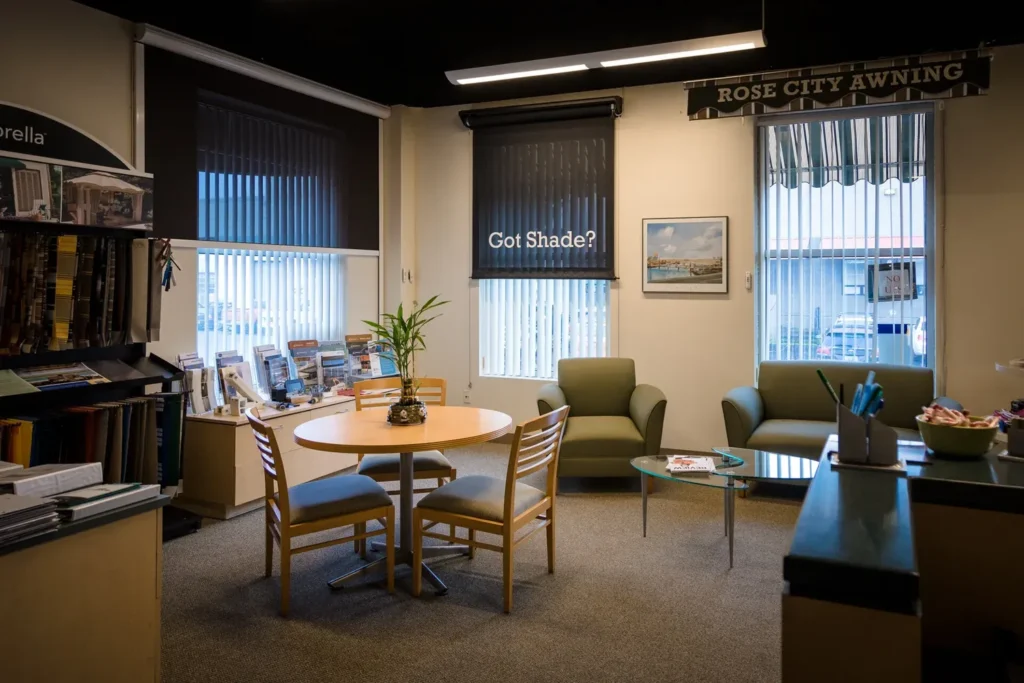
Yes. The showroom at 2728 NW Nela St has fabric sample books on the consultation table, open Monday to Thursday, 7:00 am to 5:30 pm, and Friday and Saturday by appointment.
Keep reading
All journal postsOregon Made Today: Steve Marcy on the Ideals Behind the Shop
Owner Steve Marcy was the first guest on Oregon Made Today, a podcast about Oregon makers and manufacturers. A ten-minute listen on a shop founded in 1954.
Types of Awnings: Retractable vs. Fixed vs. Metal, Compared for Portland
Retractable, fixed fabric, metal or freestanding: the four types of awnings compared on rain, wind, upkeep and looks, with a side-by-side table for Portland homes.
How to Clean an Awning: Fabric, Mildew and Winter Care in Portland
Brush, hose, mild soap, rinse, air-dry. The fabric maker’s method for cleaning an awning, the mix that lifts mildew, and how to get one ready for a Portland winter.

Thinking about one of these for your place?
Send a photo and a rough measurement. We’ll come back with what fits and a ballpark, from the shop on NW Nela Street.
- Call
- (503) 226-2761
- Showroom
- 2728 NW Nela St, Portland
Send us your project
Photos and rough measurements are often enough for a ballpark.