One Awning per Storefront: What Two New Main Street Projects Show About Commercial Awning Replacement
This week, an Arkansas town started swapping its long shared awnings for one per business, and an Ohio city priced a new covered walkway at nearly $200,000. What the budgets, the design choice and the fine print mean for a Portland storefront.
- Published
- Reading
- 9 min
Quick answer
Commercial awning replacement usually means one of three things: a recover (new fabric on a sound frame), a new awning on new framing, or breaking one long shared awning into separate awnings for each storefront. Two projects announced this week show the range: Cave City, Arkansas, expects to spend about $40,000 replacing shared Main Street awnings with individual ones, and Richmond Heights, Ohio, approved a $197,504 permanent walkway awning, mostly grant-funded.
- $40,000
- Expected total for Cave City’s AWNWARD Main Street awning project
- $10,000
- Roughly what volunteers saved Cave City by taking the old awnings down
- $197,504
- Base contract for Richmond Heights’ new community center walkway awning
- $167,000
- Of that, covered by the city’s 2026 special CDBG program
Two small cities in different corners of the country made the same decision this week: the old awning has to go, and what replaces it should do more for the building.
In Cave City, Arkansas, that means taking down awnings that stretched across several storefronts and giving each business its own. In Richmond Heights, Ohio, it means replacing an aging wooden entry cover with a long, permanent, weather-protected walkway. Here’s what each project involves, what it costs, and what a Portland business owner can take from both.
What is Cave City’s AWNWARD Main Street project?
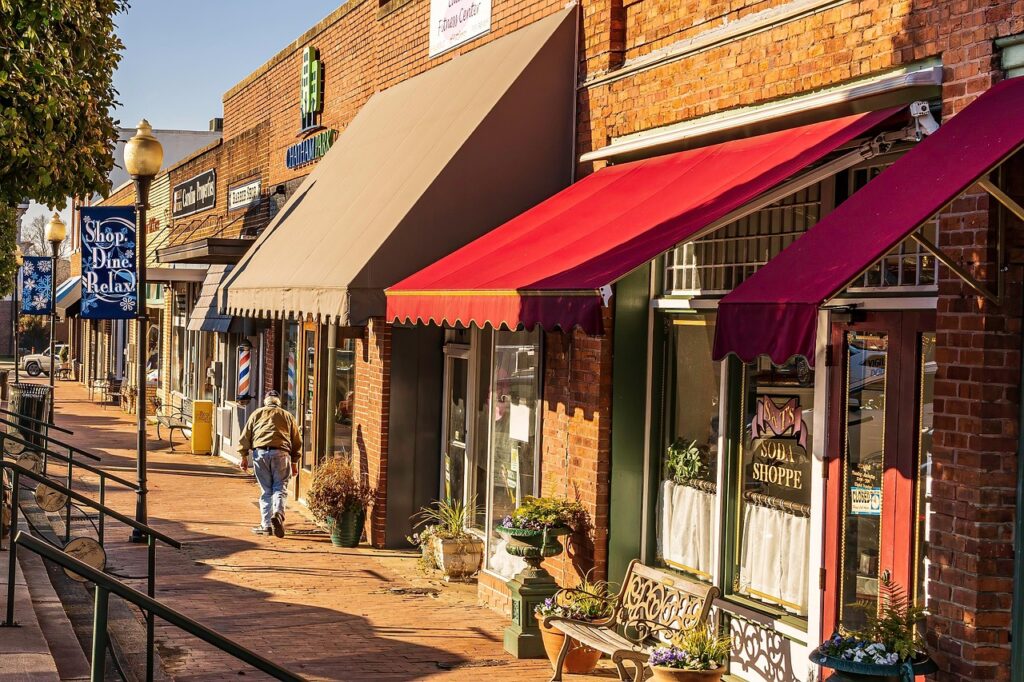
The Heart of Cave City has launched a project called AWNWARD that replaces long shared awnings on Main Street with smaller awnings designed for individual businesses, KAIT reported on November 3. Program director Brandi Schulz said the old awnings stretched over multiple storefronts and covered much of the historic architecture. Volunteers helped take them down.
Property owners are designing their own awnings to match each business and have picked their own colors and patterns. “They haven’t seen these facades in years, so they’re really excited about that,” Schulz told the station. The project is expected to cost $40,000 in total, volunteers saved about $10,000 on removal, and the new awnings are expected to go up later this month.
What is Richmond Heights building at its community center?
In Richmond Heights, Ohio, the city is replacing the entry cover at its community center with a new awning over the walkway, The News-Herald reported on November 2. Economic Development Assistant Rachel Gardiner told a City Council finance committee on October 27 that the new awning will cover almost three-fourths of the walkway, will be permanent, and will be weather-protected on three sides, with a clear plastic wall “so we can always be able to see people walking in it.”
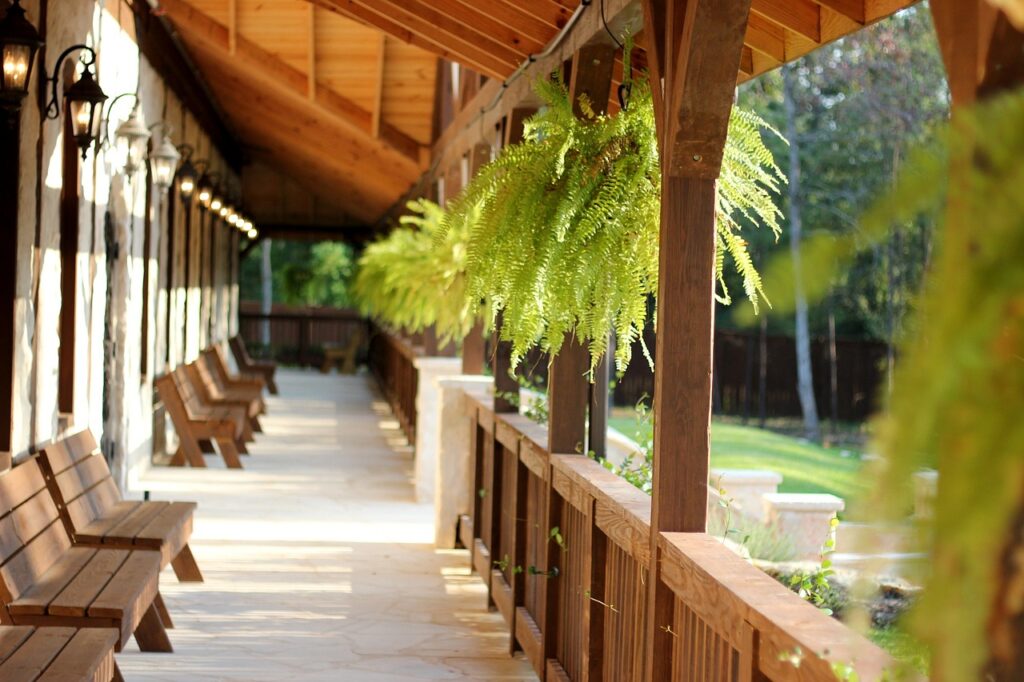
The old cover is wooden, and Gardiner said its support beams are no longer all that secure. The installation contract with Ohio Awning & Manufacturing Company is $197,504.
What do the two projects cost?
Cave City, Arkansas
AWNWARD
- Scope
- Shared Main Street awnings replaced with one per business
- Expected total
- $40,000
- Saved
- About $10,000, by volunteer removal
- Design
- Owners chose colors and patterns
- Install
- Expected later in November
Richmond Heights, Ohio
Community center walkway
- Scope
- Permanent awning over about three-fourths of the walkway
- Base contract
- $197,504
- Contingency
- $19,750 (10%)
- Not to exceed
- $217,254
- Grant
- $167,000 from the 2026 special CDBG program
Richmond Heights walkway awning: who pays, up to $217,254
- $167,000 CDBG grant 76.9%
- $30,504 city match 14.0%
- $19,750 contingency, if used 9.1%
The two numbers aren’t comparable job to job: one is several storefront awnings with volunteer help on removal, the other a long, three-sided permanent structure over a public walkway. What they share is that each budget was set before anyone knew exactly what the old awning was hiding.
Why give each storefront its own awning?
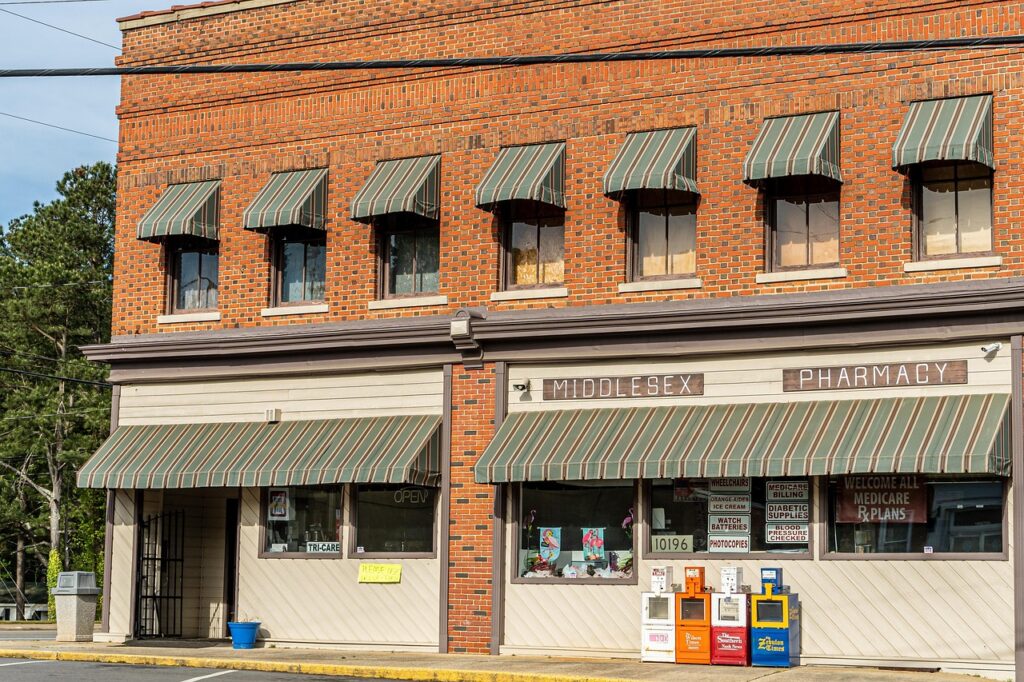
Because that’s how storefront awnings were meant to work. The National Park Service’s guidance on awnings, Preservation Brief 44, notes that on both commercial and residential buildings, awnings were historically only wide enough to cover the openings they sheltered, and “a single awning rarely covered two or more bays.” Its advice for historic buildings is direct: “Single awnings should not be set over more than one door or window bay.”
| One shared awning | One per storefront | |
|---|---|---|
| Façade | Covers the architecture between openings | Shows the building between awnings |
| Identity | One color and look for every tenant | Each business picks its color, pattern and lettering |
| Replacing or recovering | All tenants on one schedule and one budget | Each awning on its own schedule |
| Signage | Shared space on the valance | Each valance carries one business |
| Historic districts | Not recommended across bays by the Park Service | The traditional approach |
The Park Service also notes that on Main Street, businesses historically used awnings to draw attention with bright colors and stripe patterns, and that local Main Street associations, chambers of commerce or business improvement districts sometimes help with awning projects. Cave City’s “bright, bold look, with lots of color,” in Schulz’s words, is a return to that.
The part most coverage missed: budget for what’s under the old awning
The most useful line in either story is Gardiner’s explanation of the Richmond Heights contingency: “we have to take the old awning off and we just don’t know when that awning comes off what it’s going to look like underneath.”
- Plan for the wall. Old fasteners, rot behind wood framing, or masonry that was patched around an earlier awning only show up once it’s off. Richmond Heights set aside 10% for exactly that.
- Removal is real money. Cave City put a number on it: volunteers taking the old awnings down saved about $10,000 on a $40,000 project.
- Grants come with rules. HUD says each Community Development Block Grant activity must meet a national objective, such as benefiting low- and moderate-income people, and lists construction of public facilities and improvements, including neighborhood centers, among eligible uses.
In Portland, the closest program is Prosper Portland’s Vacant Storefront Grant, launched by the mayor’s office in August with $800,000. It reimburses up to 75% of eligible costs (up to $25,000 for retailers and $50,000 for restaurants) and lists signage, storefront and other permanent fixtures among eligible hard costs. Awnings aren’t named, and applications are paused due to high demand, so check with Prosper Portland before building a budget around it.
Portland’s rules for a new storefront awning
Two sets of city rules shape a storefront awning over a Portland sidewalk: the Sign Code, which sets clearances and structural standards, and the Bureau of Transportation’s encroachment rules for anything over the public right-of-way.
- Clearance. Under City Code 32.42.010, the bottom of an awning over a sidewalk must be at least 8 feet above the ground, and a free-hanging fabric valance at least 7 feet.
- Projection. PBOT’s encroachment manual says awnings may not extend more than two-thirds of the distance from the property line to the curb, with at least 2 feet of clearance from the curb. Awnings that meet those rules and the building code “do not require Revocable Encroachment Permits”; ones that don’t need City Council approval.
- Structure. Chapter 32.52 requires frames to carry at least 15 pounds per square foot of uniform load, keeps awning supports out of the right-of-way, and requires frame welding by approved welders.
- Lettering. Signs on awnings must meet the Sign Code’s sign standards, and in the Design Overlay Zone, awnings can be subject to design review.
A walkway awning like Richmond Heights’ is a different structure from a wall-mounted storefront awning: it usually stands on its own posts. In Portland, Chapter 32.52 requires all awning supports to sit outside the right-of-way, so posts belong on private property. Storefront awnings in Portland covers the sign permit side in more detail.
How a commercial awning replacement goes
- Photos and a rough measurementThe whole frontage, each opening, and a close-up of the existing frame and anchors. That’s often enough for a ballpark.
- Recover or replaceA straight, solid frame usually just needs new fabric. A failing frame, or a layout you want to change, means new framing.
- Design per storefrontShape, color and stripe for each business, with lettering sized to read from the street.
- Check the city rulesClearances, projection, curb setback, and any sign permit or design review the location needs.
- Build it in the shopWe weld frames, sew covers and apply graphics in-house on 3M Scotchcal ElectroCut film.
- Install and keep the specsOur own crew installs, and the dimensions and fabric stay on file for the next recover.
Rose City Awning just completed a beautiful installation of three new awnings at our showroom in Portland.
What this means for Portland businesses
Whether it’s a block of storefronts or a single entrance, the lesson from both projects is the same: decide what the new awning should do for the building, budget for what’s under the old one, and give each business its own identity. We’ve built commercial awnings for Portland businesses since 1954, with awning graphics made in our own shop. For covered entries, see patio covers and canopies; for low-maintenance metal, aluminum awnings. If your current awning only needs new fabric, awning repair and recovering is where to start, and awning cost in Portland explains what drives the price.
Damage, not age, behind the replacement? What to do after an awning is hit or storm-damaged covers the first steps.
Sources
- Heart of Cave City launches AWNWARD, revamps Main Street, KAIT (Josh Droll), November 3, 2026
- Richmond Heights Community Center to get new awning, The News-Herald (Frank Mecham), November 2, 2026
- Preservation Brief 44: The Use of Awnings on Historic Buildings, National Park Service
- Community Development Block Grant Program, U.S. Department of Housing and Urban Development
- TRN-8.08 Encroachments in the Public Right-of-Way, Portland Bureau of Transportation
- 32.42.010 Construction and Structural Requirements, Portland City Code
- Chapter 32.52 Awnings, Portland City Code
- Vacant Storefront Grant, Prosper Portland
- Mayor Wilson Announces Launch of Vacant Storefront Grant, City of Portland
Questions
Commercial awning replacement questions
Can you replace just the fabric on a commercial awning?
Yes, if the frame is straight and solid. That’s a recover: new fabric on the existing frame. A failing frame, or a layout you want to change, such as breaking one long shared awning into one per storefront, means new framing.
How much does a Main Street awning replacement cost?
It depends on scope. Cave City, Arkansas, expects its AWNWARD project, which replaces shared Main Street awnings with one per business, to cost $40,000, with volunteers saving about $10,000 on removal. Richmond Heights, Ohio, approved a $197,504 base contract for a permanent walkway awning at its community center, plus a $19,750 contingency.
Should each storefront have its own awning?
Usually, yes. The National Park Service’s Preservation Brief 44 notes that historic awnings were only as wide as the openings they sheltered and advises that a single awning should not be set over more than one door or window bay. Separate awnings also let each business choose its own color, pattern and lettering.
What are Portland’s rules for an awning over a sidewalk?
Under Portland City Code 32.42.010, the bottom of an awning over a sidewalk must be at least 8 feet above the ground, and a free-hanging fabric valance at least 7 feet. PBOT’s encroachment manual limits projection to two-thirds of the distance from the property line to the curb, with at least 2 feet of clearance from the curb, and Chapter 32.52 requires frames to carry at least 15 pounds per square foot.
Are there grants for storefront awnings in Portland?
Prosper Portland’s Vacant Storefront Grant reimburses up to 75% of eligible costs, up to $25,000 for retailers and $50,000 for restaurants, and lists signage, storefront and other permanent fixtures among eligible hard costs. Awnings aren’t named, and applications are paused due to high demand, so check with Prosper Portland first.
Keep reading
All journal postsStorefront Awnings in Portland: Signs, Permits and Design
A storefront awning is shelter, shade and a sign in one. Frame types, how lettering is made, Portland’s 8-foot sidewalk clearance and permits, and what a bid needs.
Awning Hit by a Truck or a Storm? What the Irmo Collapse Shows About Awning Damage
A FedEx truck brought down a care home’s awning in Irmo, S.C., on Oct. 28. What to check after an awning is hit or storm-damaged, and when it needs a repair, recover or new frame.
Types of Awnings: Retractable vs. Fixed vs. Metal, Compared for Portland
Retractable, fixed fabric, metal or freestanding: the four types of awnings compared on rain, wind, upkeep and looks, with a side-by-side table for Portland homes.

Replacing a storefront awning?
Send a photo and a rough measurement. We’ll come back with what fits and a ballpark, from the shop on NW Nela Street.
- Call
- (503) 226-2761
- Showroom
- 2728 NW Nela St, Portland
Send us your project
Photos and rough measurements are often enough for a ballpark.