
Motorized Retractable Awnings: How the Motor, Sensors and Remote Work
A motorized retractable awning puts shade on a button. What’s inside one, what the wind and sun sensors really do, what it needs for power, and when a hand crank still makes sense.
- Published
- Reading
- 9 min
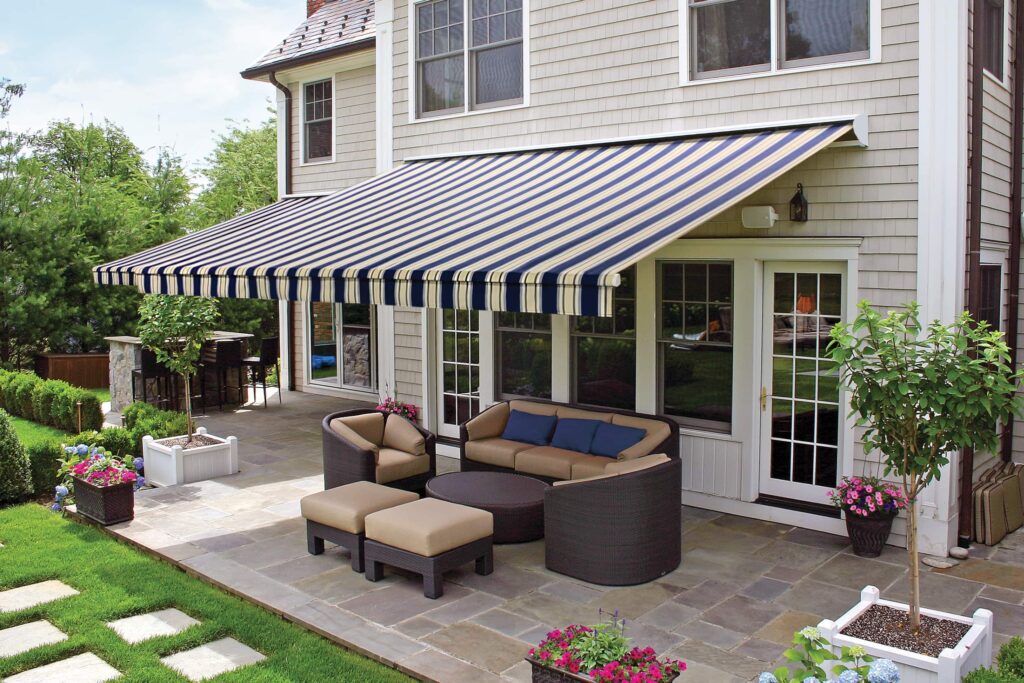
Quick answer
A motorized retractable awning has a tubular motor hidden inside the roller tube that rolls the fabric out and back from a remote, a wall switch or an app. Most also get a wind sensor that retracts the awning when it starts to shake, and some add sun or rain sensors. Every SummerSpace awning we install can be motorized with Somfy controls or run by hand with a crank.
- 1
- Button to open or close it, from a remote, wall switch or app
- 3D
- How Somfy’s Eolis 3D wind sensor reads movement in the awning
- 99%
- Of solar rays SummerSpace says its Tempotest fabric can block
- 20°F
- How much SummerSpace says an awning can cool the area it shades
The best retractable awning is the one that actually gets used. On a hot afternoon, a crank that takes a minute of winding often loses to “we’ll just sit inside.”
That’s the real case for a motor. It isn’t only convenience: a motorized awning can be paired with a wind sensor that pulls it in when you’re not watching, which a hand-cranked awning can’t do. Here’s how the system works, what to choose, and what we tell people to plan for before install day.
How does a motorized retractable awning work?
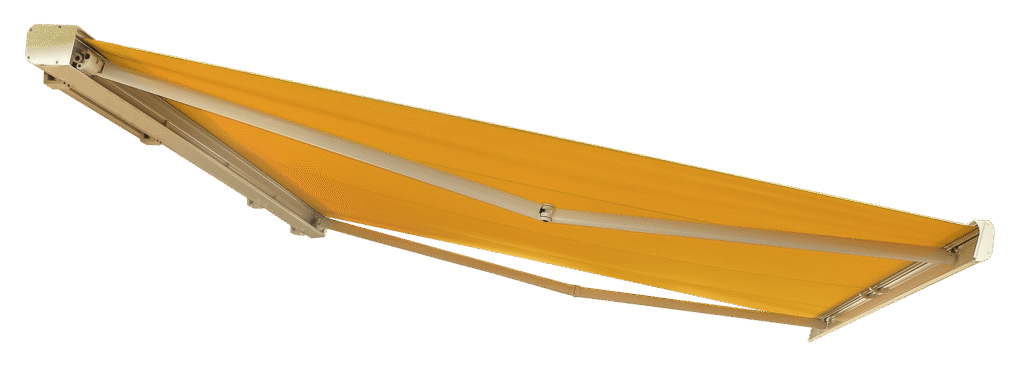
The motor is a tube-shaped unit that slides inside the awning’s roller tube, so you never see it. When it turns, the roller lets the fabric out and the folding arms push the front bar forward; turned the other way, it winds the fabric back and pulls the arms closed. On every SummerSpace awning we install, a stainless steel chain turns the roller, whether a Somfy motor or a hand crank drives it.
- Hood or cassetteCovers the rolled fabric when the awning is in. Full-cassette models close up almost completely.
- Tubular motorHidden in the roller tube. Its limits are set so it stops fully open and fully closed.
- Folding armsArticulating arms push the front bar out and set the pitch so rain runs off.
- Front bar and wind sensorSomfy’s Eolis 3D wind sensor mounts on the front bar, where it can feel the awning move.
- Sun sensorAn optional outdoor sensor that can bring the awning out when the sun is strong.
- Remote or appA hand-held remote, a wall switch or the TaHoma by Somfy app.
Somfy’s Sunea line is a typical example of an awning motor: built for standard, semi-cassette and cassette awnings, it runs on radio signals from the remote, so there are no wires between the motor and the controls, and distributor Trivantage lists it with torque sensing, limits set from the remote and a manual override.
Motorized or manual: which should you choose?
Both use the same awning, fabric and arms. The difference is what turns the roller, and what that makes possible.
| Motorized (Somfy) | Manual crank | |
|---|---|---|
| How you run it | Remote, wall switch or app | A hand crank turns the gear |
| Wind sensor | Yes: retracts it in a gust | Not available |
| Sun and rain sensors | Optional | Not available |
| Power | Needs an outdoor power supply near the hood | None |
| Power outage | Somfy CMO motors can be run by hand | Not affected |
| Best for | Wide awnings, upper decks, daily use, homes left empty during the day | Smaller awnings within easy reach, occasional use |
Our rule of thumb: if the awning is big, high up, used most days, or likely to be left out while nobody’s home, go motorized with a wind sensor. A crank makes sense for a small awning you’ll open now and then and always close by hand. Are retractable awnings worth it? covers the rest of the decision.
What do awning wind, sun and rain sensors do?
Sensors are what turn a motorized awning from a convenience into something that looks after itself. Somfy makes three that matter for awnings.
Wind
Eolis 3D WireFree RTS
Mounts on the front bar and senses the awning’s movement. When it passes the threshold you set, the sensor retracts the awning. Somfy says its sensitivity is adjustable, and it runs on batteries, so it needs no wiring.
Sun
Sunis WireFree RTS
When the sun gets strong, it can extend the awning over the seating or dining area, which Somfy says also protects outdoor furniture from long hours of direct sun.
Rain
Ondeis rain and solar sensor
Can be programmed to retract the awning when it detects rain, which Somfy says helps prevent water damage, staining and mold.
The part most buyers don’t hear: a wind sensor is a backup, not a guarantee. Trivantage, a Somfy distributor, notes that wind damage can still happen even with an Eolis sensor and recommends retracting awnings when they’re unattended. SummerSpace, the maker of every retractable awning we install, gives the same advice for high winds. We design exposed decks around the wind from the start, then add the sensor as insurance.
When should a retractable awning be in?
SummerSpace tells owners to close their awnings whenever rain, hail, high winds or snow are expected or happening. Here’s how that plays out on a Portland deck.
Fine to be out
Sun, heat, calm afternoons
This is what it’s for. A sun sensor can bring it out for you.
Keep an eye on it
A passing light shower
The fabric is water-resistant and the arms set a pitch that sheds water, but retract it if the rain is forecast to settle in.
Bring it in
Steady rain, hail or wind
Water can pool on extended fabric and make it sag. The wind sensor is a backup, not permission.
Never open
Snow
Snow adds weight that can buckle the arms or frame. Leave it in the cassette.
Bring it in
Nobody home
Close it when you leave. Trivantage recommends retracting awnings whenever they’re unattended.
All winter
Retracted, not removed
No need to take it down. A semi- or full-cassette protects the rolled fabric.
That’s the honest trade-off with any retractable in Portland: it’s a fair-weather awning. If you want cover through the rainy season, pair it with, or choose instead, a fixed awning, a canopy or motorized patio screens.
What does a motorized awning need for power and controls?
- Power at the hood. The motor needs household power near the end of the awning. Somfy’s Sunea awning motors, for example, run on 110 volts. Plan the outlet or circuit with your electrician before install day so the cord or wiring can be run neatly.
- Radio controls. Somfy’s RTS controls talk to the motor by radio, so the remote, wall switch and sensors don’t need wires back to the motor.
- Remote, switch or app. A hand-held remote is standard. The TaHoma by Somfy app adds control from your phone, and Somfy’s Telis Soliris Patio RTS remote can run the sun and wind automation from one control.
- Batteries in the sensors. The Eolis 3D wind sensor runs on batteries. Replace them as Somfy’s instructions direct, so the wind protection never quietly stops.
- A manual override. Somfy’s CMO (compact manual override) motors can be run by hand when power isn’t available. Ask whether yours has one before you need it.
Which SummerSpace awnings do we install?
SummerSpace is the only retractable line we carry. These six cover most Portland homes, from a single window to a full deck. We confirm motor and sensor options for your model and size on the site visit.
| Model | Housing | Good for |
|---|---|---|
| Performance 250 | Semi-cassette | Decks and patios that see heavy use |
| Pro Series 97 | Semi-cassette | Exposed spots where the fabric needs protecting |
| Series K300 | Full cassette | Modern homes where a clean line matters |
| Traditional 87 | Open roll | Patios where you want to tune the angle |
| Traditional 77 | Open roll | Patios where a traditional look fits |
| Robusta | Window awning | Windows that take afternoon sun; motorized or manual gear |
Keeping a motorized awning running
Most problems with a motorized awning come down to power, the remote, the limits, or a sensor that needs batteries. Retractable awning motor not working? walks through the safe checks to try first. Inside the awning, the drive matters too: we install SummerSpace for its stainless steel chain drive, which in our experience lasts 15 to 20 years or more in the Pacific Northwest, where many budget awnings use a glued rubber belt.
When something does need a hand, our Repair & Recover service works on motors, switches, arms and hardware on retractable awnings of any brand.
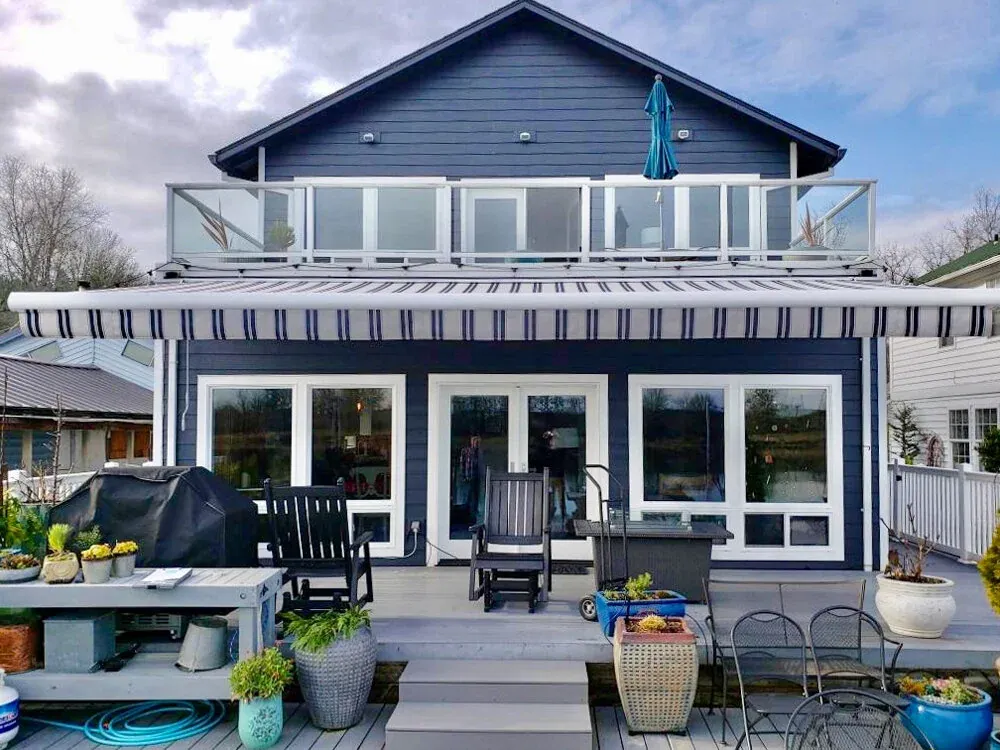
We had a challenging situation: high elevation and lots of wind while trying to protect our view… designed an awning that did the job.
Is a motorized retractable awning right for you?
If you want shade most afternoons, have a wide or high awning, or will sometimes leave it out while you’re away, a motor and a wind sensor are worth it. If the awning is small and you’ll always be there to close it, a crank does the job. Either way, plan the power before install day and keep the awning in when the weather turns. Our retractable awnings in Portland page has the full SummerSpace lineup and how we size each one, and patio and deck awnings compares retractable, fixed and free-standing shade.
Sources
- Retractable Awning, SummerSpace
- When Should I Keep My Retractable Awnings Closed?, SummerSpace, January 19, 2023
- Maximize Your Smart Awning Experience With Climate Sensors, Somfy, January 30, 2026
- Eolis 3D WireFree RTS wind sensor brochure, Somfy Systems
- Somfy Eolis 3D WireFree RTS Wind Sensor, Trivantage
- Somfy Sunea RTS CMO 550R2 Motor, Trivantage
- Somfy RTS CMO Motors, Trivantage
- Radio technology eliminates need for wired awning motors, Industrial Fabrics Association International
Questions
Motorized retractable awning questions
How does a motorized retractable awning work?
A tubular motor hidden inside the roller tube turns the roller to let the fabric out or wind it back in, and the folding arms push the front bar out or pull it closed. You run it from a remote, a wall switch or an app, and its limits are set so it stops fully open and fully closed.
Is a motorized or manual retractable awning better?
Motorized is better for wide awnings, upper decks, daily use and homes left empty during the day, because it can be paired with a wind sensor that retracts it in a gust. A manual crank suits a smaller awning within easy reach that you open now and then and always close by hand.
Will a wind sensor protect my awning in every storm?
No. A wind sensor such as Somfy’s Eolis 3D retracts the awning when its movement passes the threshold you set, but it’s a backup, not a guarantee. Trivantage, a Somfy distributor, notes wind damage can still happen and recommends retracting awnings when they’re unattended, and SummerSpace advises closing them in high winds.
Can a motorized awning be opened if the power goes out?
Somfy’s CMO (compact manual override) motors can be run by hand when power isn’t available. Ask whether your awning’s motor has a manual override before you need it.
Can a retractable awning stay out in the rain?
Only in a passing light shower. The fabric is water-resistant and the arms set a pitch that sheds water, but SummerSpace advises closing its awnings whenever rain, hail, high winds or snow are expected or happening, because water can pool on the fabric and make it sag.
Keep reading
All journal postsWhy We Use Stainless Steel Chains in Our SummerSpace Awnings (and Why It Matters)
The drive inside a retractable awning decides whether it lasts twenty years or slips in year three. Why every SummerSpace awning we install runs on a steel chain.
Retractable Awnings in Portland: A Homeowner’s Guide to Shade on Demand
Shade when you want it, open sky when you don’t. Are retractable awnings worth it? Motor or crank, wind sensors, fabric, how long they last and honest downsides.
Washington Flags at Half-Staff Today: What the Order Covers and How to Lower Yours Correctly
Gov. Ferguson ordered flags lowered Nov. 9 for two Spokane County deputies. Who the order covers, the Flag Code steps, and what to do if your flag can’t come down.


Thinking about a motorized awning?
Send photos of the wall and the area to shade, a rough width and which way it faces. We’ll suggest a model, motor and sensors, from the shop on NW Nela Street.
- Call
- (503) 226-2761
- Showroom
- 2728 NW Nela St, Portland
Send us your project
Photos and rough measurements are often enough for a ballpark.