Exterior Solar Shades vs. Interior Blinds: Keeping a Portland Home Cool
Stop the sun on the outside of the glass and the room never heats up in the first place.
- Published
- Updated
- Reading
- 3 min
Quick answer
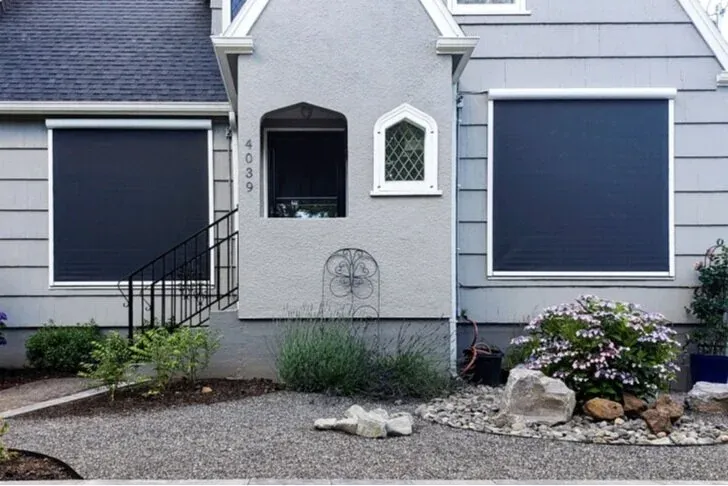
For heat, exterior solar shades beat interior blinds, because they stop sunlight before it passes through the glass. The Department of Energy’s Building America guide notes that exterior attachments are typically more effective at reducing solar heat gain, and solar mesh keeps much of your view. Interior blinds still win for privacy at night.
- 46%
- Solar heat gain cut by insect screens mounted outside (DOE / PNNL)
- 14%
- The same screens mounted inside
- 65–97%
- Range of heat blocking in solar screen fabrics (Phifer)
We started our 2020 staycation series with windows, because that’s where a house gains most of its summer heat. Six years and one record heat wave later, the advice is the same, with better numbers behind it: if you want a cooler room, stop the sun on the outside of the glass.
Why shading outside the window works better
Sunlight that passes through glass turns into heat inside the room. An interior blind catches some of it, but the heat is already indoors. An exterior shade stops it first. According to the Department of Energy’s Building America Solution Center, exterior attachments “block sunlight before it passes through the window, so they are typically more effective at reducing solar heat gain,” and “because the screen is located outside the window, solar heat absorbed by the screen remains outside the home.”
The same guide cites research on plain insect screens: 46% less solar heat gain mounted outside, 14% mounted inside. Purpose-made solar fabrics go much further.
How exterior solar screens work
A solar screen is a woven mesh designed to block heat and UV while letting you see out. Fabrics vary: Phifer, one of the largest screen makers, describes solar screen options from 65% to 97% heat blocking. A tighter weave blocks more sun and gives up some outward view; Phifer suggests higher protection for hot, sunny exposures and lower percentages where visibility matters more.
On the outside of a house, solar fabric usually rolls on a retractable shade, so it comes down for the afternoon and goes back up at dusk. Zip-style systems lock the fabric’s edges into side tracks so it stays put in wind. We install SummerSpace FlexShade and Futureguard Vivista systems; see motorized and solar screens for both.


Exterior solar shades vs. interior blinds vs. awnings
| Feature | Exterior solar shade | Interior blind | Window awning |
|---|---|---|---|
| Stops heat before the glass | Yes | No | Yes, from above |
| Keeps the view | Mostly, through the mesh | Only when open | Yes, below the awning |
| Low east and west sun | Yes, covers the full window | Yes | Partly |
| Privacy at night | Limited | Yes | No |
| Retracts when not needed | Yes | Yes | Fixed, unless retractable |
Where exterior shades pay off most
- West-facing windows and sliders that take the low afternoon sun an awning can’t reach.
- Glass walls and big picture windows that heat a whole room.
- Home offices and TV rooms where glare is the real problem.
- Rooms with wood floors and furniture you want to protect from UV fading.

Privacy, day and night
During the day, you can see out through a solar screen but people outside have a hard time seeing in. At night, with the lights on inside, that reverses. If nighttime privacy matters, pair exterior shades with interior curtains, or choose a solid fabric for the rooms that need it. Our patio privacy screens guide covers solid and mesh fabrics for outdoor rooms.
Motorized or manual
Both work. Motorized shades come down with a button or remote, which makes it more likely you’ll actually use them every afternoon. Manual shades cost less. Either way, the price depends on the width and height of each window, the system, the fabric and the controls, so we quote after a free consultation; what affects cost explains the factors.
If you want to keep the air conditioning bill down, stop squinting at your screen, and keep your view, give us a call at (503) 226-2761. We’d be happy to talk through the options.
Originally published April 29, 2020, as the first post in our staycation home-improvement series. Rewritten and expanded October 22, 2026.
Sources
- Window Attachments for Solar Control and Energy Efficiency, Building America Solution Center, U.S. Department of Energy / PNNL
- Considering Solar Window Screens, Phifer
Questions
Exterior solar shade questions
Are exterior solar screens better than interior blinds?
For heat, yes. Exterior screens stop sunlight before it passes through the glass, so the heat stays outside. In research cited by the Department of Energy’s Building America guide, insect screens reduced solar heat gain by 46% mounted outside versus 14% inside.
Can people see through solar shades at night?
Often, yes. In daylight you can see out while people outside have trouble seeing in, but at night with interior lights on the effect reverses. Pair solar shades with curtains or choose a solid fabric where nighttime privacy matters.
Do solar screens make a room dark?
Less than you might expect. Solar mesh lets light and view through while cutting heat and glare. Tighter weaves block more sun and darken the room more, so the fabric can be chosen per window.
Can exterior shades be motorized?
Yes. Exterior solar shades can be motorized or manual. Rose City Awning installs SummerSpace FlexShade and Futureguard Vivista systems.
How much do exterior solar shades cost?
It depends on the width and height of each window, the system, the fabric and the controls, so Rose City Awning & Flag quotes after a free consultation. Photos and rough measurements of each window are often enough for a ballpark.
Keep reading
All journal postsPatio and Porch Privacy Screens: Outdoor Shades for Portland Weather
A patio privacy screen that rolls away when you want the view: outdoor roller shades for privacy, low sun and wind, plus how to choose the fabric and fit them.
Types of Awnings: Retractable vs. Fixed vs. Metal, Compared for Portland
Retractable, fixed fabric, metal or freestanding: the four types of awnings compared on rain, wind, upkeep and looks, with a side-by-side table for Portland homes.
How to Clean an Awning: Fabric, Mildew and Winter Care in Portland
Brush, hose, mild soap, rinse, air-dry. The fabric maker’s method for cleaning an awning, the mix that lifts mildew, and how to get one ready for a Portland winter.


Thinking about one of these for your place?
Send a photo and a rough measurement. We’ll come back with what fits and a ballpark, from the shop on NW Nela Street.
- Call
- (503) 226-2761
- Showroom
- 2728 NW Nela St, Portland
Send us your project
Photos and rough measurements are often enough for a ballpark.