Stationary Awnings Explained: Welded Frame, Pipe Frame and Rope Pull-Up
Three versions of the awning most people picture, and what sets them apart.
- Published
- Updated
- Reading
- 3 min
Quick answer
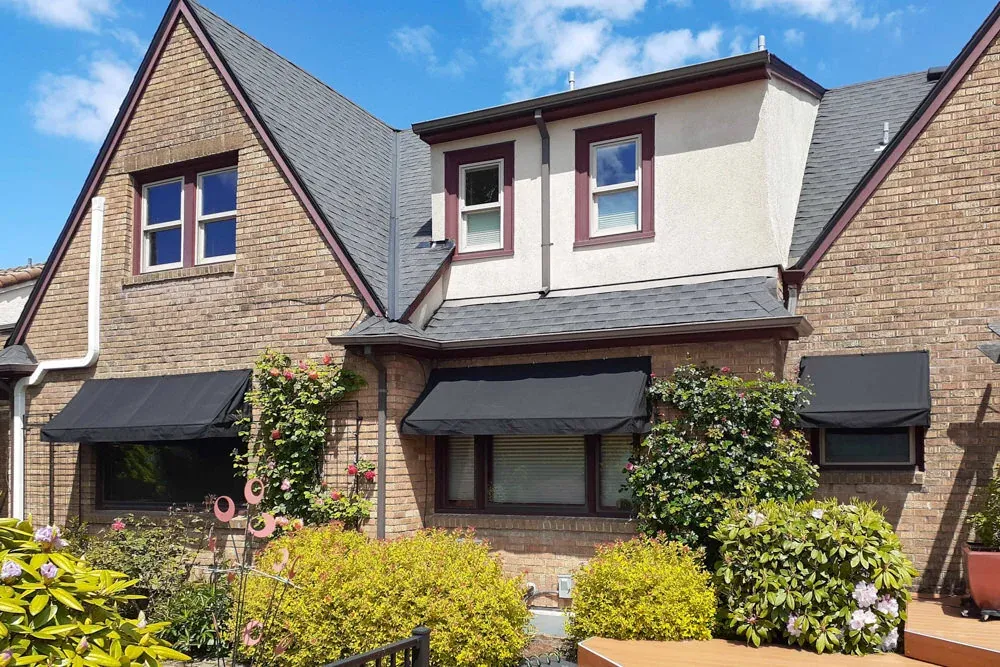
A stationary awning, also called a fixed awning, stays up all year on a frame attached to the building. The three fabric types we build differ in the frame: welded aluminum (crisp, fitted, permanent), pipe frame (the traditional look, often with a valance) and rope pull-up (raised in winter to let the sun in).
When you think of an awning, what usually comes to mind is what we would call a stationary awning. There’s more than one type. The differences are in the frame, the construction of the fabric and, lastly, how they work through the year.
Welded frames and staple-on awnings
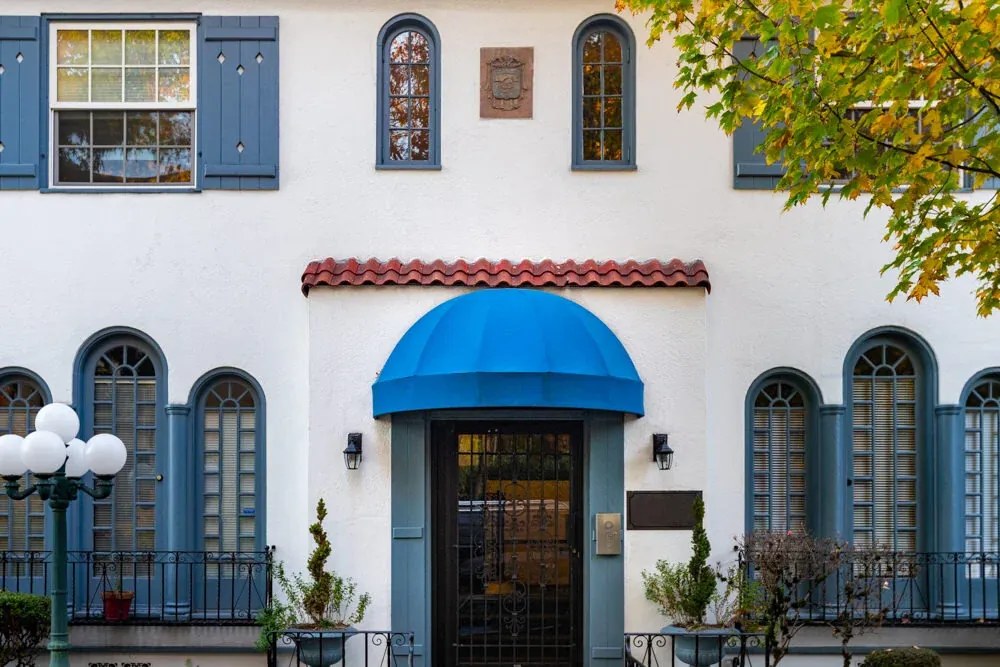
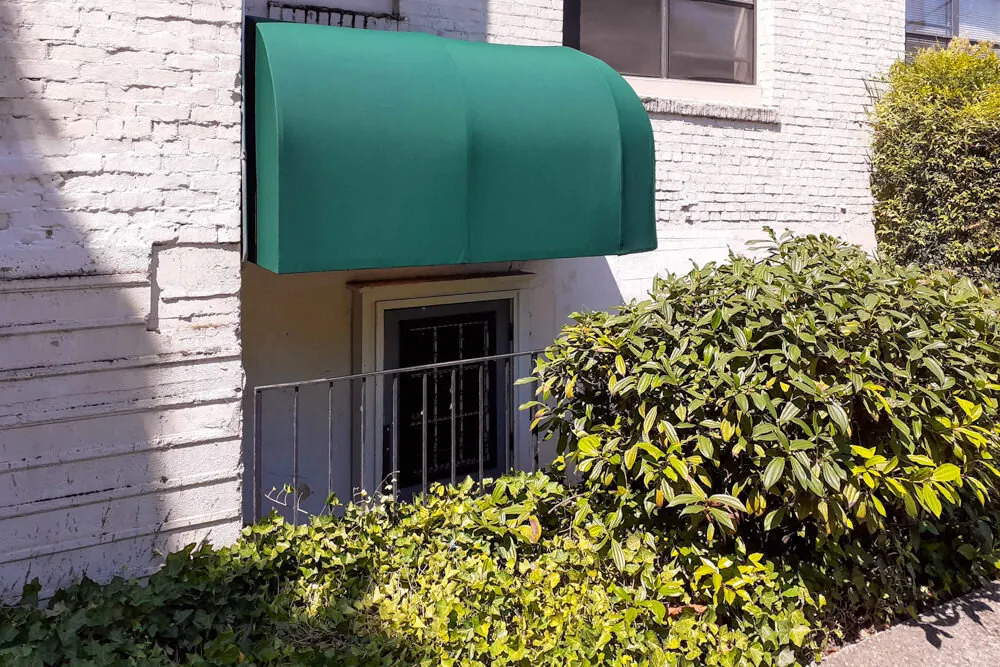
Welded-frame stationary awnings have a clean, crisp look. The fabric fits tightly over aluminum frames that we weld and shape in our own shop to fit the building: dome, concave, convex or straight. They suit places where you want a fixed structure and permanent coverage, and they come in many styles.
Another option with the welded design is to eliminate most of the thread. That’s a staple-on awning, where the cover is fastened to the frame rather than sewn around it; we also finish frames lace-on. Both versions are fitted and have a modern look.
Pipe frame awnings
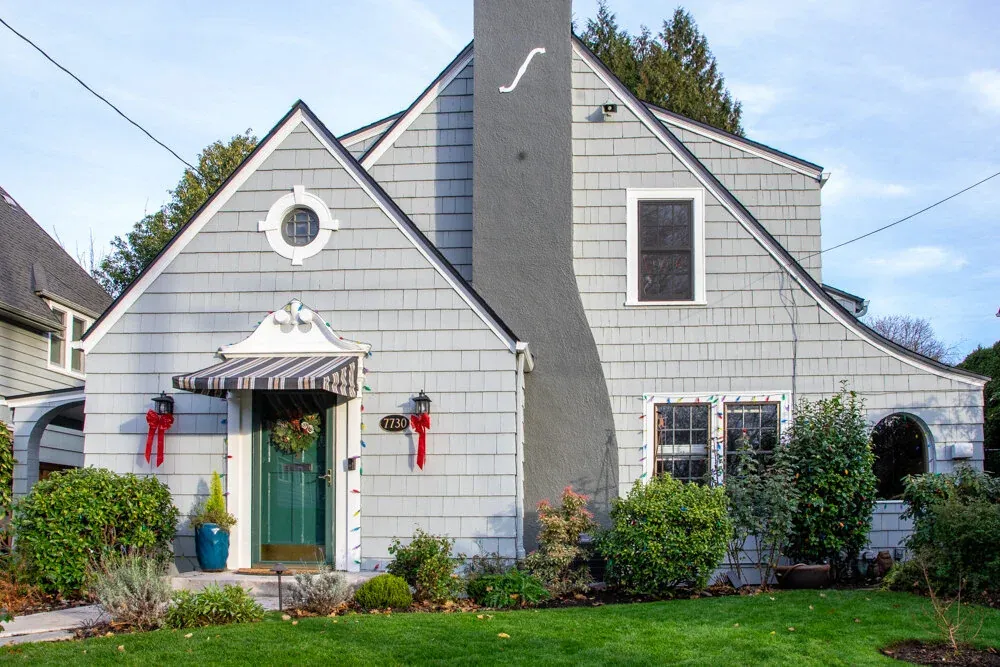
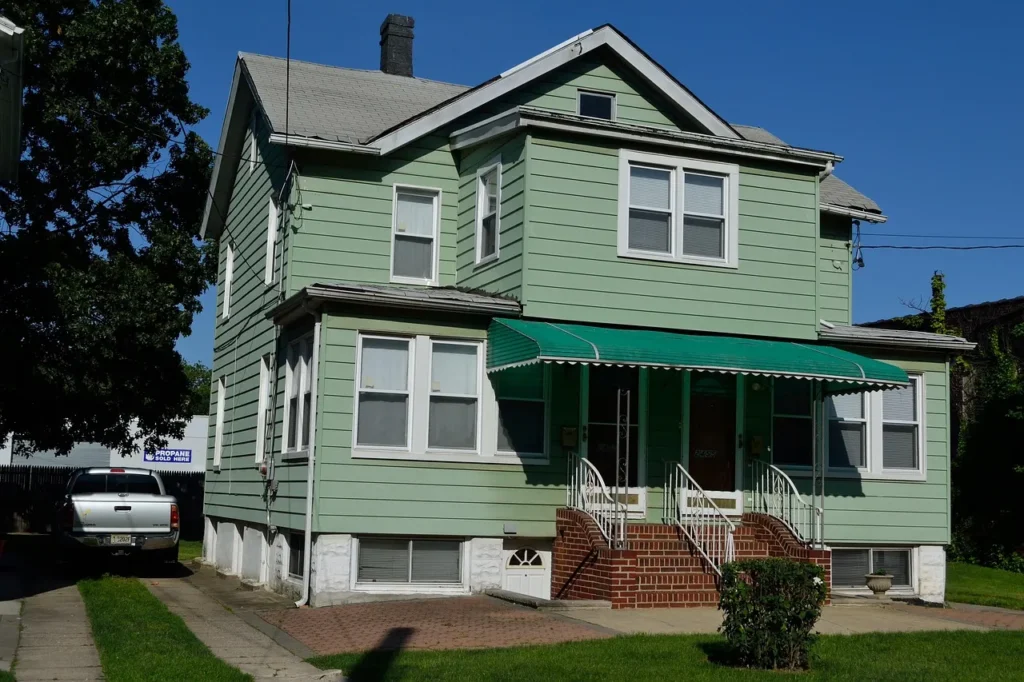
Pipe frame awnings are the most traditional type there is. When you picture an awning, more than likely it’s a pipe frame. The look is relaxed compared with a welded frame, and it’s often finished with a valance, straight or with a braided scallop. There are many colors and styles, so we can custom design one for the house or the storefront.
Rope pull-up (RPU) awnings
Rope pull-up awnings are versatile in ways similar to retractable awnings, at a much smaller scale. You raise them with a rope in winter, which makes them easy to clean off and lets sunlight warm the house. In summer, you drop them back down to keep the room shaded and cooler. That seasonal switch matters at Portland’s latitude, where the winter sun is low and welcome; we explain the sun angles in do window awnings reduce heat?.
Side by side
| Feature | Welded frame | Pipe frame | Rope pull-up |
|---|---|---|---|
| Look | Crisp, fitted, modern | Traditional, relaxed | Traditional, adjustable |
| Shapes | Dome, concave, convex, straight | Classic sloped | Sloped |
| Cover attachment | Sewn, staple-on or lace-on | Sewn to fit, often with valance | Sewn to fit |
| Winter sun | Stays down | Stays down | Raise it to let the sun in |
| Good for | Doors, entries, storefronts | Windows, porches, storefronts | Windows |
All three take Sunbrella and other proven awning fabrics in solids and stripes, and all three can carry a logo or lettering, cut and applied in our shop. When the fabric eventually wears, the frame usually doesn’t, and a recover puts new fabric on it. If you’d rather have no fabric at all, aluminum awnings are the low-maintenance alternative.
Fixed or retractable?
A fixed awning gives permanent cover over a door, window or walkway, every day of the year. A retractable awning rolls out on folding arms when you want shade and retracts when you don’t, so the deck gets open sky the rest of the time. Over a door or a window, fixed usually wins. Over a big deck, many people want the choice; see our retractable awning guide.
In Portland, window awnings no more than 54 inches deep, supported by an exterior wall, outside a design zone and not projecting past the property line generally don’t need a building permit, per Portland Permitting & Development. Storefront awnings fall under City Code Chapter 32.52.
See all of these, plus aluminum awnings: window and door awnings in Portland.
Originally published May 11, 2020, in our staycation home-improvement series. Rewritten and expanded October 22, 2026.
Sources
- Do you need a permit for your home project?, Portland Permitting & Development
- Chapter 32.52: Awnings, Portland City Code
Questions
Stationary awning questions
What is a fixed awning called?
A stationary awning. It stays up year-round on a welded aluminum, pipe or rope pull-up frame, or it’s made entirely of aluminum. A retractable awning is the opposite: it rolls back into a hood or cassette when you don’t need it.
What is the difference between a welded frame and a pipe frame awning?
A welded frame is shaped aluminum with the fabric fitted tightly over it, for a crisp, modern look in dome, concave, convex or straight shapes. A pipe frame is the traditional style, more relaxed, often finished with a straight or scalloped valance.
What is a rope pull-up awning?
A small fixed fabric awning that you raise with a rope in winter to let the sun in and make cleaning easy, then lower in summer for shade.
How long does a fabric window awning last?
Years, if it’s cleaned now and then. The frame usually outlives the cover, so when the fabric is worn, a recover puts new fabric on the frame you already have.
Keep reading
All journal postsTypes of Awnings: Retractable vs. Fixed vs. Metal, Compared for Portland
Retractable, fixed fabric, metal or freestanding: the four types of awnings compared on rain, wind, upkeep and looks, with a side-by-side table for Portland homes.
Do Window Awnings Reduce Heat? What Portland Homeowners Should Know
Window awnings stop the sun before it reaches the glass. How much heat they block, why Portland’s summer sun angle helps, and which windows to shade first.
How to Clean an Awning: Fabric, Mildew and Winter Care in Portland
Brush, hose, mild soap, rinse, air-dry. The fabric maker’s method for cleaning an awning, the mix that lifts mildew, and how to get one ready for a Portland winter.


Thinking about one of these for your place?
Send a photo and a rough measurement. We’ll come back with what fits and a ballpark, from the shop on NW Nela Street.
- Call
- (503) 226-2761
- Showroom
- 2728 NW Nela St, Portland
Send us your project
Photos and rough measurements are often enough for a ballpark.