Door Awnings: How to Choose the Right Awning Over Your Front Door
The awning over a front door works harder than any other on the house. It keeps rain off the step, the door and whoever is looking for their keys. How to pick the shape, size it to the entry and choose fabric or aluminum, from a Portland shop that has built them since 1954.
- Published
- Reading
- 8 min

Quick answer
A good door awning is wider than the door and its trim, reaches far enough to cover the landing or top step, sits high enough to clear the door, a storm door and the porch light, and has enough slope to shed rain. Pick the shape to suit the house (traditional, dome, concave or convex), then choose fabric for color, stripes and lettering or aluminum for the least upkeep.
- 4
- Shapes we build most for doors: traditional, dome, concave and convex
- 2
- Materials to choose from: sewn fabric on a frame, or all-aluminum
- 36.9 in
- Normal yearly rain at Portland International Airport (NOAA, 1991–2020)
- 74%
- Of that rain falls October through March
Most people decide they want a door awning on a wet November evening, standing on the step with a bag of groceries and a door that won’t unlock fast enough.
That’s the right instinct. A door awning is the most useful awning on most houses, and the easiest to get wrong: too narrow and the rain still hits the step, too low and the storm door scrapes it, too flat and water sits in the fabric. Here’s how to choose one that looks like it belongs to the house and actually keeps you dry.
What is a door awning, and what does it do?
An awning over an entry is called a door awning or an entry canopy. Most are fixed: a fabric cover on a welded aluminum, galvanized pipe or rope pull-up frame, or an all-aluminum awning. It keeps rain off the doorstep and the door, gives you a dry spot to find your keys or sign for a package, and shades door glass that takes afternoon sun.
It’s also the first thing anyone sees of the house. That’s why the shape and color matter as much as the size.
Which door awning shape suits your house?
These are the four side profiles we build most often for doors. The curved ones need a welded aluminum frame; the traditional slope can go on a pipe frame or a welded one.
Traditional
A straight slope with a valance. The classic choice for Craftsman, colonial and cottage entries.
Dome
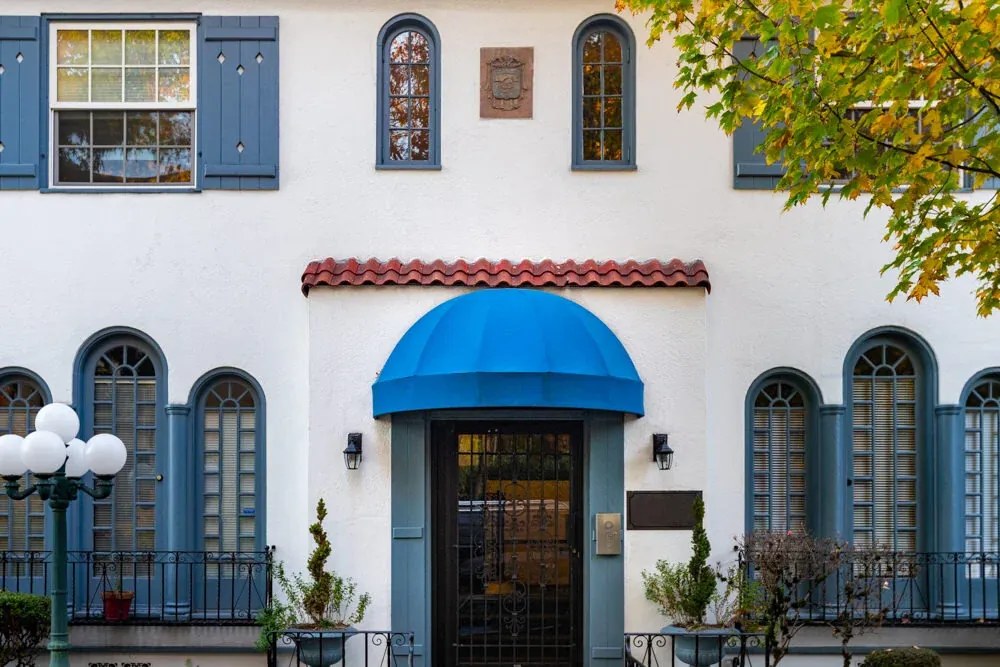
A rounded half-dome. Made for arched doors and arched transom windows.
Concave
A gentle inward curve. Softer than a straight slope; suits modern and mid-century fronts.
Convex
An outward bow, sometimes called a quarter-round. Reads as solid and a little formal.
A simple rule: let the awning follow the opening. A dome over an arched door looks built-in; a straight traditional awning over the same arch looks added on later.
How big should an awning over a door be?
Size is where most off-the-shelf door awnings fall short, because the right size comes from your entry, not a box. The National Park Service’s guidance on awnings, Preservation Brief 44, notes that historic awnings were only as wide as the openings they sheltered. That’s still the starting point: size the awning to the door and its trim, then add enough to keep the rain off.
- Width. Wider than the door and its trim, so rain running off the sides misses the step. If there are sidelights, the awning usually covers them too.
- Projection. Far enough out to cover the landing or the top step, which is where you stand while the door opens.
- Height. High enough to clear the top of the door, the swing of a storm or screen door, and the porch light. It should still sit close enough to the door to keep rain off it.
- Slope. Enough pitch that water runs off the front edge instead of pooling. Flat fabric holds water; a curved or sloped frame sheds it.
- What’s on the wall. Porch lights, house numbers, a doorbell camera, gutters and the roof edge above all decide where the frame can mount. We plan around them so the camera still sees the step.
Why projection matters more in Portland
A door awning in a dry climate is mostly for shade. Here it’s mostly for rain, and the rain comes in the months you use the front door most with wet coats and boots.
Portland rain by month
- October–March: 74% of the year’s rain
- May–September
Rain rarely falls straight down at a front door. It blows in at an angle and drips off the edge of whatever is overhead. That’s why we lean toward a little more projection and a valance at the front edge, rather than a shallow awning that only covers the top of the door.
Fabric or aluminum: which is better over a front door?
Both keep rain off the doorstep. They differ in how they look, how flexible they are, and how much upkeep they ask for.
| Fabric awning | Aluminum awning | |
|---|---|---|
| Look | Soft, classic or modern, in solids and stripes | Sleek and modern |
| Shapes | Traditional, dome, concave, convex and custom | Many styles and colors |
| Frame | Welded aluminum, galvanized pipe or rope pull-up | The awning is the structure |
| Lettering | House name, numbers or a logo applied in our shop | — |
| Install | Frame and cover made to fit, then installed | Usually a few hours |
| Weather | Rope pull-up versions raise for winter light | Holds snow, hail and sleet |
| Upkeep | Regular cleaning; recover with new fabric when worn | Very little |
If the house is historic or the entry has an arch, fabric on a welded frame usually wins, because it can take the exact shape of the opening. If you want the awning up and forgotten, aluminum is hard to beat. Our metal awnings page covers aluminum and steel in more detail.
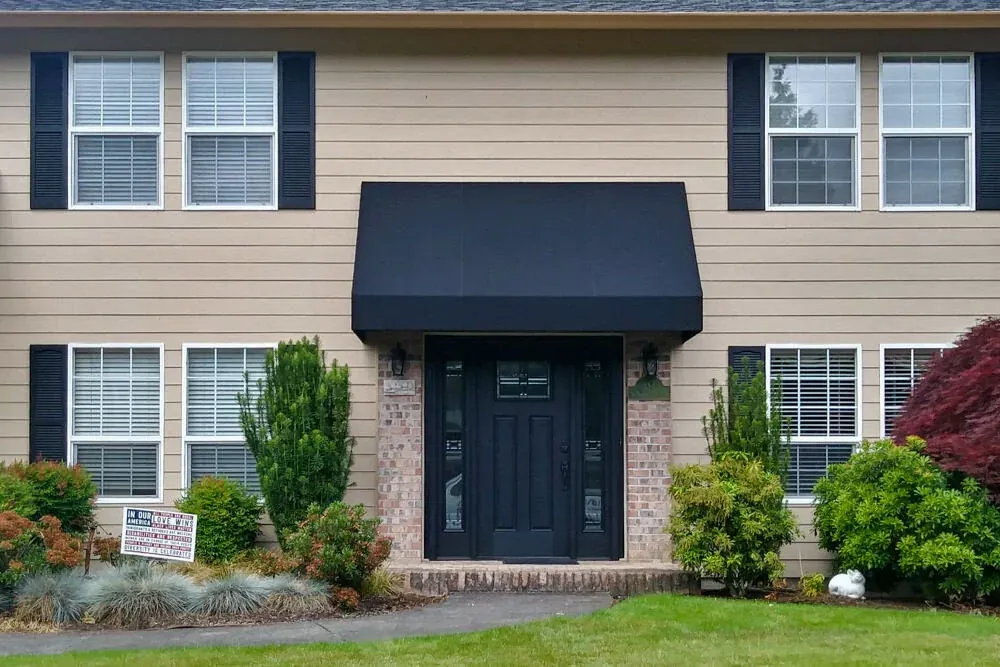
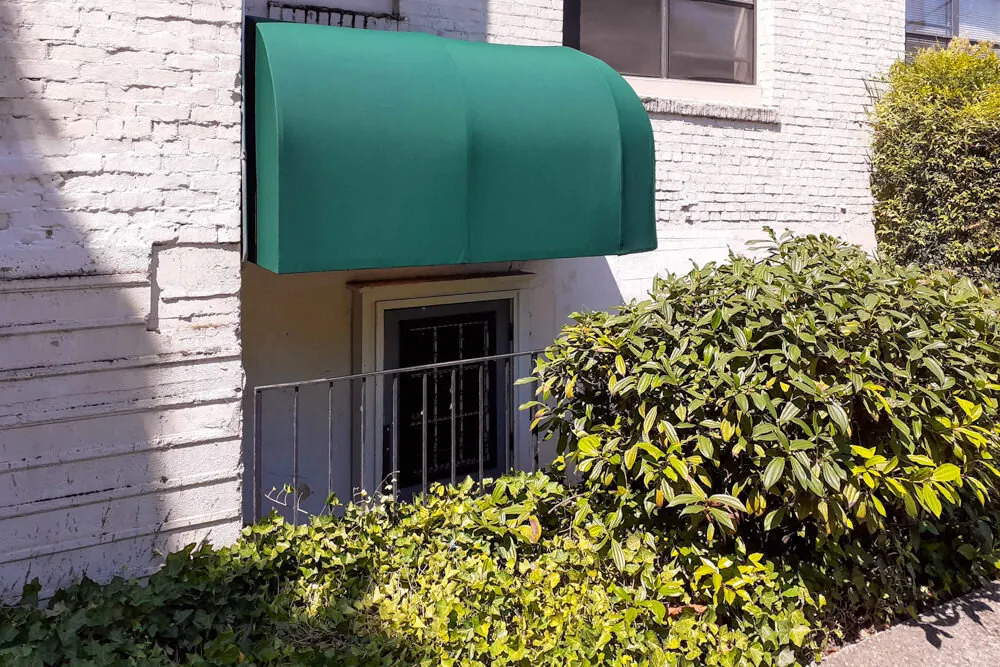
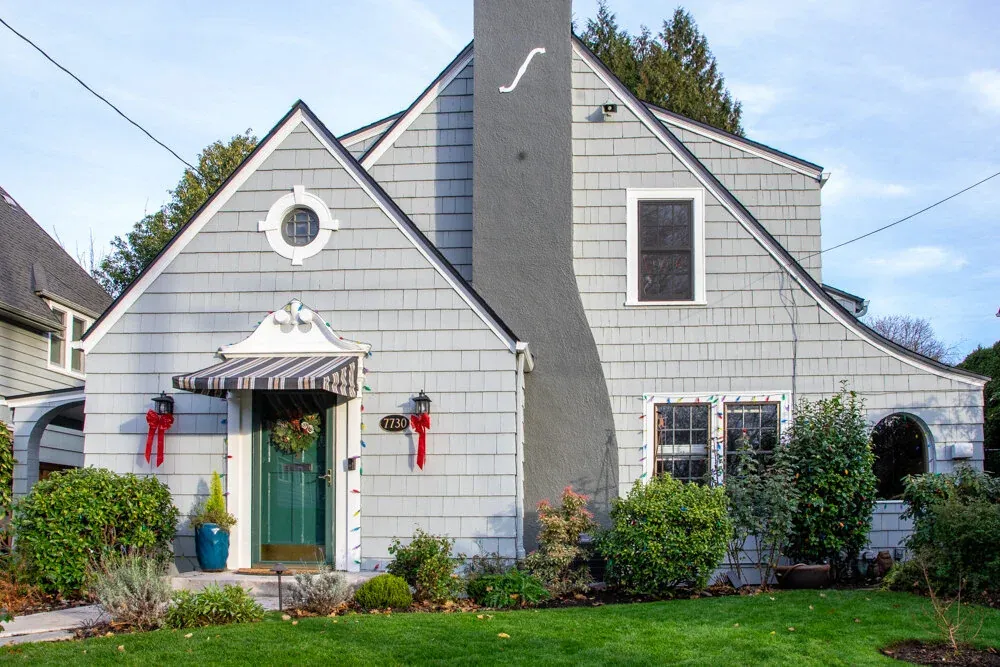
Door awnings we’ve built
A few front doors around Portland, from cottages to colonials. Every one started with a straight-on photo and a rough width.

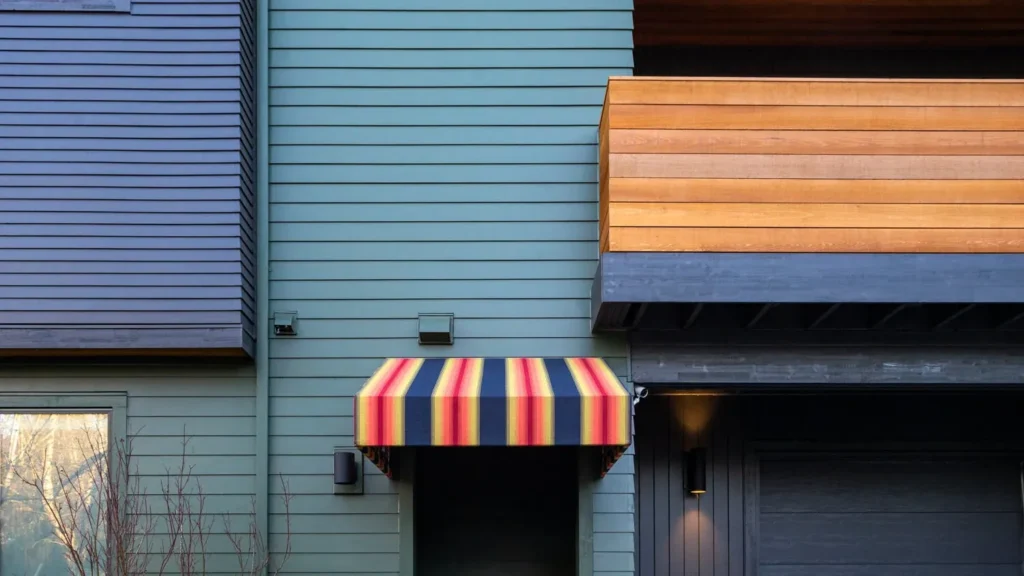

Which fabric works for a door awning in Portland?
We sew door awnings in Sunbrella and other proven awning fabrics, in solids and stripes. Most are solution-dyed acrylic, which holds its color in the sun and sheds water, and it’s what most people still call a “canvas awning.” The differences are in canvas vs. acrylic awning fabric.
Bring the fabric question to the showroom on NW Nela Street if you can. A swatch held up against your siding and door color in daylight decides it faster than any screen. If you’d rather start at home, our awning visualizer puts a style and fabric on a photo of your house.
When a fabric awning finally wears, the frame usually doesn’t. A recover puts new fabric on the same frame; see awning repair and recovering.
How a door awning project goes
- Send a photo and a rough widthA straight-on photo of the door and a rough width is usually enough for us to suggest a shape and fabric.
- Choose shape and fabricPick from samples in the showroom or from photos, in solids or stripes, with lettering if you want it.
- Measure on siteWe measure the entry, the step, the door swing and everything on the wall around it.
- Build it in the shopWe weld or cut the frame and sew the cover in our NW Portland shop.
- InstallOur own crew installs it. An aluminum awning usually takes a few hours.
- Keep the specsThe dimensions and fabric stay on file, so a future recover starts with the numbers already known.
I was scared to get one because I was putting it on the front of my house. But it looks good and gives alot of shade.
The short version for your front door
Size the awning to the door and trim, give it enough projection to cover the step, mount it high enough to clear the door and low enough to keep rain off, and let the shape follow the opening. Then pick fabric for color and character or aluminum for low upkeep. We’ve built window and door awnings in Portland since 1954, and awning cost in Portland explains what sets the price. If the awning will be up all year, fixed awnings explains the three frame types, and for windows that take afternoon sun, see do window awnings reduce heat.
Sources
- Preservation Brief 44: The Use of Awnings on Historic Buildings, National Park Service
- Portland Precipitation Data: Normals and Extremes, National Weather Service Portland
Questions
Door awning questions
What is an awning over a door called?
An awning over an entry is called a door awning or an entry canopy. Most are fixed: a fabric cover on a welded aluminum, galvanized pipe or rope pull-up frame, or an all-aluminum awning.
How big should an awning over a front door be?
Wider than the door and its trim, so rain running off the sides misses the step, and deep enough to cover the landing or top step. It should sit high enough to clear the door, a storm door and the porch light, with enough slope to shed rain. Exact sizes come from your entry, measured on site.
Is a fabric or aluminum awning better for a front door?
Fabric gives you more shapes, solids and stripes, and lettering applied in our shop, and it can be recovered when the fabric wears. Aluminum is sleek, usually installs in a few hours, holds snow, hail and sleet, and needs very little upkeep. Both keep rain off the doorstep.
Which awning shape is best for an arched door?
A dome. Its rounded half-dome follows an arched door or transom, so it looks built in rather than added on. Curved shapes like dome, concave and convex are made on a welded aluminum frame.
How do I get an estimate for a door awning?
Send Rose City Awning & Flag a straight-on photo of the door and a rough width. That’s usually enough to suggest a shape and fabric and give a ballpark, and we measure on site before we build.
Keep reading
All journal postsTypes of Awnings: Retractable vs. Fixed vs. Metal, Compared for Portland
Retractable, fixed fabric, metal or freestanding: the four types of awnings compared on rain, wind, upkeep and looks, with a side-by-side table for Portland homes.
Do Window Awnings Reduce Heat? What Portland Homeowners Should Know
Window awnings stop the sun before it reaches the glass. How much heat they block, why Portland’s summer sun angle helps, and which windows to shade first.
Stationary Awnings Explained: Welded Frame, Pipe Frame and Rope Pull-Up
Fixed awnings stay up all year. The three kinds of stationary fabric awning we build, welded frame, pipe frame and rope pull-up, and how they differ in look and upkeep.

Planning a door awning?
Send a straight-on photo of the door and a rough width. We’ll suggest a shape and fabric and come back with a ballpark, from the shop on NW Nela Street.
- Call
- (503) 226-2761
- Showroom
- 2728 NW Nela St, Portland
Send us your project
Photos and rough measurements are often enough for a ballpark.